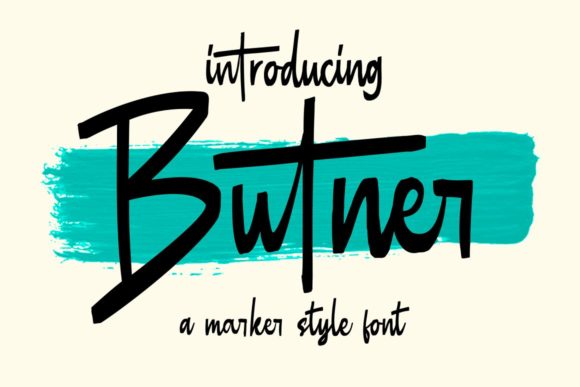
Butner: A Casual Handwritten Font for Human-Centered Web Design
In the digital space, where users crave authenticity, the choice of typography can make or break the perceived humanity of a brand. Butner stands out as a casual handwritten font that injects personality into sterile layouts. Its quirky, approachable character is incredibly adept at softening corporate interfaces, making landing pages feel like personal invitations, and transforming online stores into welcoming boutiques. For web designers and digital product creators, this script handwritten typeface is a tool for building trust before the first click.
Butner for Hero Headers and Landing Page Personality
The first impression on a website is often a headline. Using Butner for your hero section or primary landing page title immediately establishes an informal, friendly tone. This casual handwritten font works because its organic flow mimics human gesture, setting expectations for a more personal, less transactional experience. For a coaching website, SaaS product page, or creative portfolio, a main headline set in Butner says, “This is made by people, for people.” It’s incredibly fit for those initial, high-impact moments where you need to capture attention and convey brand values instantly.
Optimizing Butner for Digital Readability and Scanning
While handwritten fonts can sometimes challenge legibility, Butner’s design balances character with clarity. Its slightly quirky nature doesn’t sacrifice the essential readability needed for users scanning content. In practice, this means Butner performs best as a display font for short phrases: key headers, call-to-action buttons, product names, or section labels. For body copy, pairing Butner with a clean, neutral sans serif font creates a perfect visual hierarchy—the handwritten font provides personality and focus, while the body font ensures comfortable reading. This pairing is essential for maintaining professionalism while showcasing brand character.
Building Brand Tone with Butner Across Digital Platforms
A consistent online identity requires typography that scales across touchpoints. Butner’s versatility makes it incredibly adept for a wide variety of contexts beyond the main website. Use this script handwritten font for email campaign headers, social media graphics, digital ad copy, and blog post titles. This repetition builds a recognizable brand voice. For an online store, applying Butner to special offer banners or curated collection titles can make promotional content feel less like an advertisement and more like a personal recommendation from the shop owner, directly supporting conversion-focused layouts.
Butner in UI Design: Enhancing App Screens and Product Interfaces
For digital product creators and UI designers, font choice directly impacts user emotion and engagement. Butner can be a strategic asset in app screens where you want to reduce user anxiety or foster a creative environment. Imagine using Butner for the welcome screen of a creative tool, the category titles in a lifestyle app, or the congratulatory messages in a learning platform. Its informal design softens the digital experience. However, practical application requires testing on mobile screens and responsive layouts—ensure Butner retains its charm and legibility at smaller sizes, perhaps by using it only for larger UI elements and pairing it with a highly legible system font for all instructional text.
Practical Font Pairing Strategies with Butner for Web Projects
A successful web typography system relies on contrast. Butner, as a distinctive handwritten font, needs a supportive partner for body and functional text. A simple, geometric sans serif font like Inter or Open Sans creates a clean, modern base that lets Butner shine without overwhelming the user. For a more editorial or boutique feel, a classic serif font like Georgia or Merriweather can pair beautifully, especially for online stores selling physical goods or blogs focused on long-form content. This pairing establishes a clear visual hierarchy: Butner for emotional impact and key points; the paired font for readable, detailed information.
Using Butner for Conversion Elements and Call-to-Action Design
Buttons and calls to action are critical conversion points. Applying Butner to a primary CTA button, like “Get Your Free Guide” or “Start Creating,” can make the action feel more personal and less generic. The handwritten style suggests a human touch, potentially increasing user trust and click-through rates. It’s incredibly fit for these informal designs where you want to stand out from the standard, system-button look. For best results, ensure sufficient padding around the text and contrast against the background—test on both light and dark themes to guarantee the font’s quirky details remain clear and actionable.
Commercial Licensing and Technical Implementation of Butner
When integrating Butner into client projects or your own digital products, understanding its licensing is key. Most commercial font licenses cover usage in websites, online stores, and digital templates. Confirm the license allows for web embedding. Technically, you’ll need the webfont files (typically WOFF2/WOFF formats) to implement Butner via CSS. Check if the font includes stylistic alternates or multiple weights, though its casual style often shines in a single weight. For multilingual support, verify the character set includes the necessary glyphs for your target audience. Proper implementation ensures this script handwritten font performs reliably across all browsers and devices, protecting the brand identity you’ve built with it.
Ultimately, Butner is more than just a font; it’s a design asset for humanizing the digital experience. Its casual, quirky charm is a direct antidote to impersonal, template-driven web design. By strategically applying it to headers, CTAs, and brand accents, and pairing it wisely with functional body fonts, you create online environments that feel authentic, engaging, and trustworthy. This is the core of modern typography in web design—using type to not only inform, but to connect.